More dissolved oxygen
Inside the chamber, increased pressure allows plasma to carry substantially more dissolved oxygen.
When recovery still feels incomplete
Hyperbaric oxygen therapy changes the physical environment around living tissue. Explore what that may mean, where human evidence exists, and whether an assessment makes sense for you.
Clear explanations · medical screening · no promises of a cure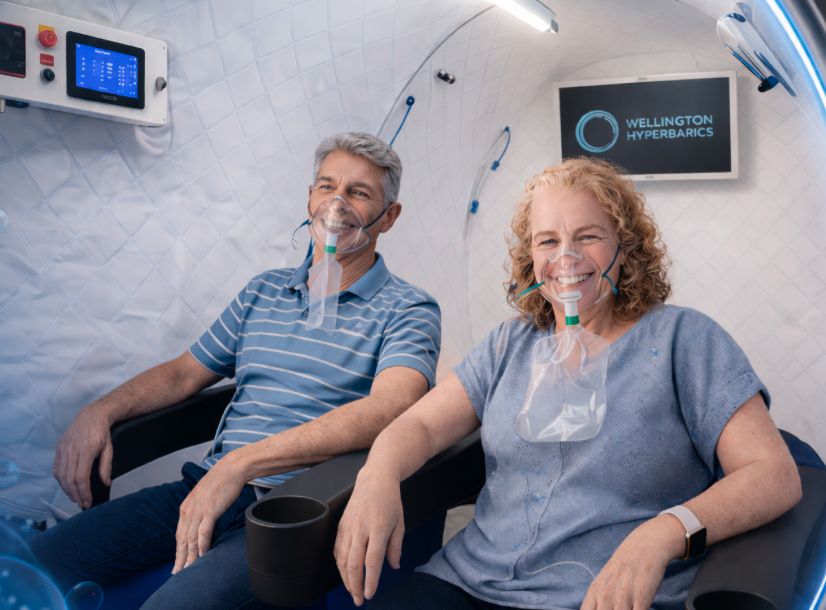
The idea in three steps
Pressure allows more oxygen to dissolve directly into blood plasma. That can create a stronger oxygen gradient into nearby viable tissue and may support selected repair processes.
Inside the chamber, increased pressure allows plasma to carry substantially more dissolved oxygen.
A stronger gradient may help oxygen move further from functioning capillaries into living, stressed tissue.
Available oxygen may support cellular energy, collagen, immune activity and microvascular repair.
The honest boundary: HBOT cannot revive dead tissue, reopen a blocked artery or replace surgery, antibiotics or appropriate specialist care.
Start with your situation
Potential benefit depends on the diagnosis, timing, tissue viability and treatment protocol. Choose a topic to see the human evidence and its limitations.
Persistent concussion, TBI and selected neurological research
Review the evidence →02Selected delayed soft-tissue and bone injury after radiotherapy
Review the evidence →03Fatigue, cognition and function in emerging human studies
Review the evidence →04Pain, fatigue and function—with important evidence limits
Review the evidence →05Cognition, perfusion and biological markers—not a promise of age reversal
Review the evidence →06Erectile function, PTSD, safety and treatment protocols
Review the evidence →
Your first visit
Clinical judgement before treatment
We consider diagnosis, timing, viable tissue, circulation and care already under way.
We separate recognised indications and human evidence from mechanisms or unproven claims.
We screen ear, lung, medication and other factors, and arrange medical review when needed.
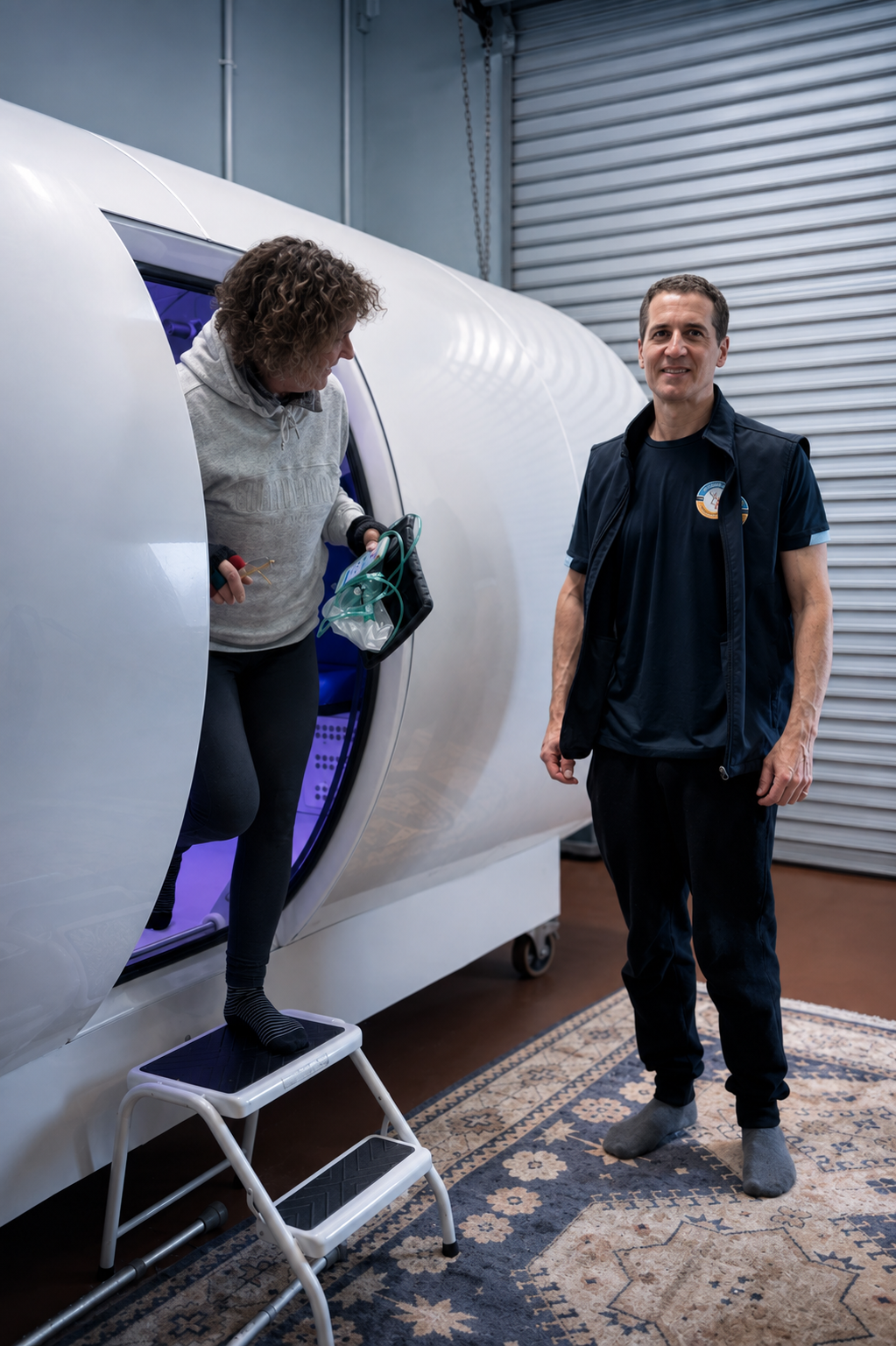
Measured at our Wellington clinic
These de-identified before-and-after cases show what changed for individuals who completed a course and repeated the same cognitive assessment. They cannot prove that HBOT alone caused the result.
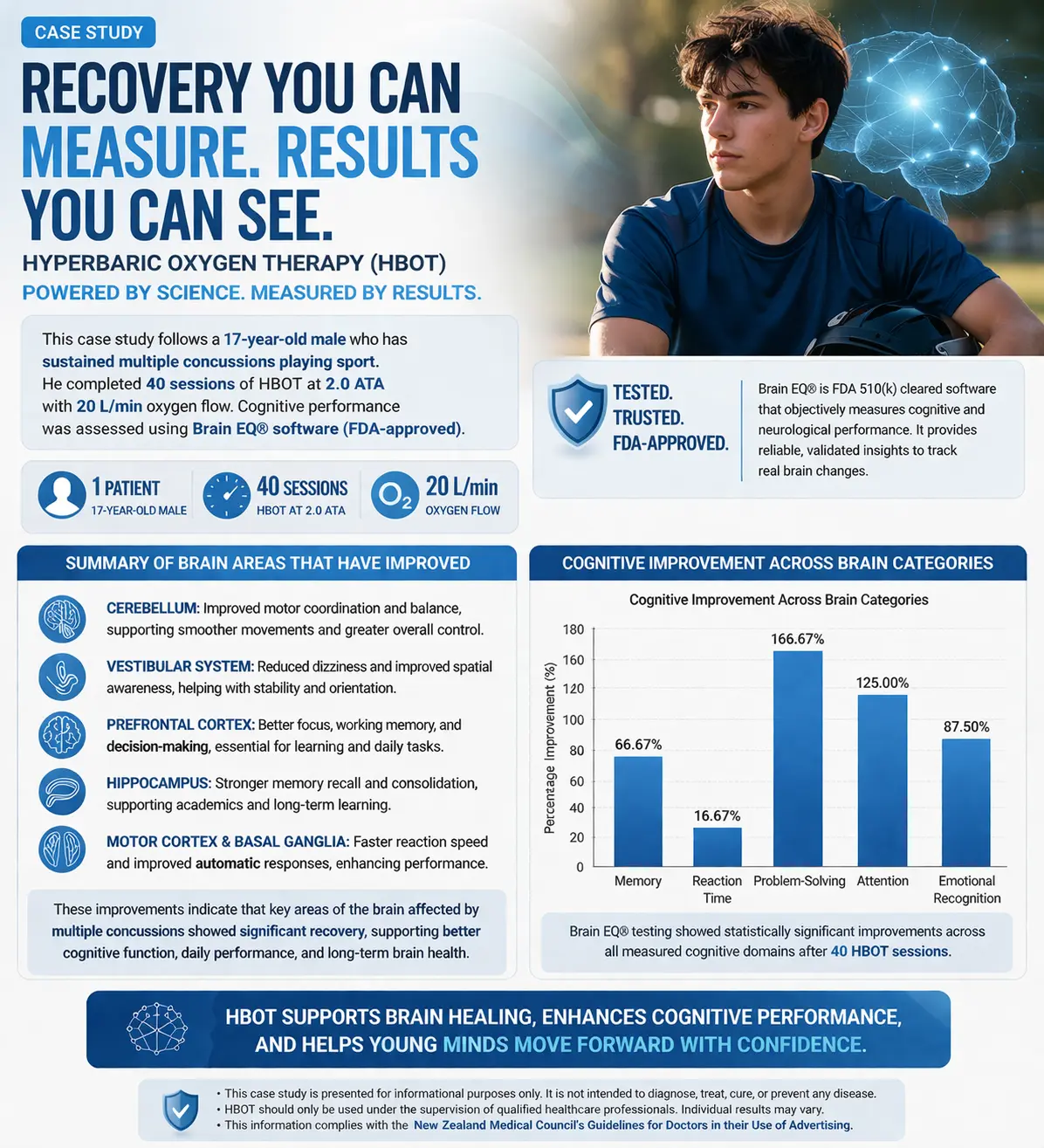 Persistent concussion · age 1740 sessions with repeat cognitive testingView measured case ↗
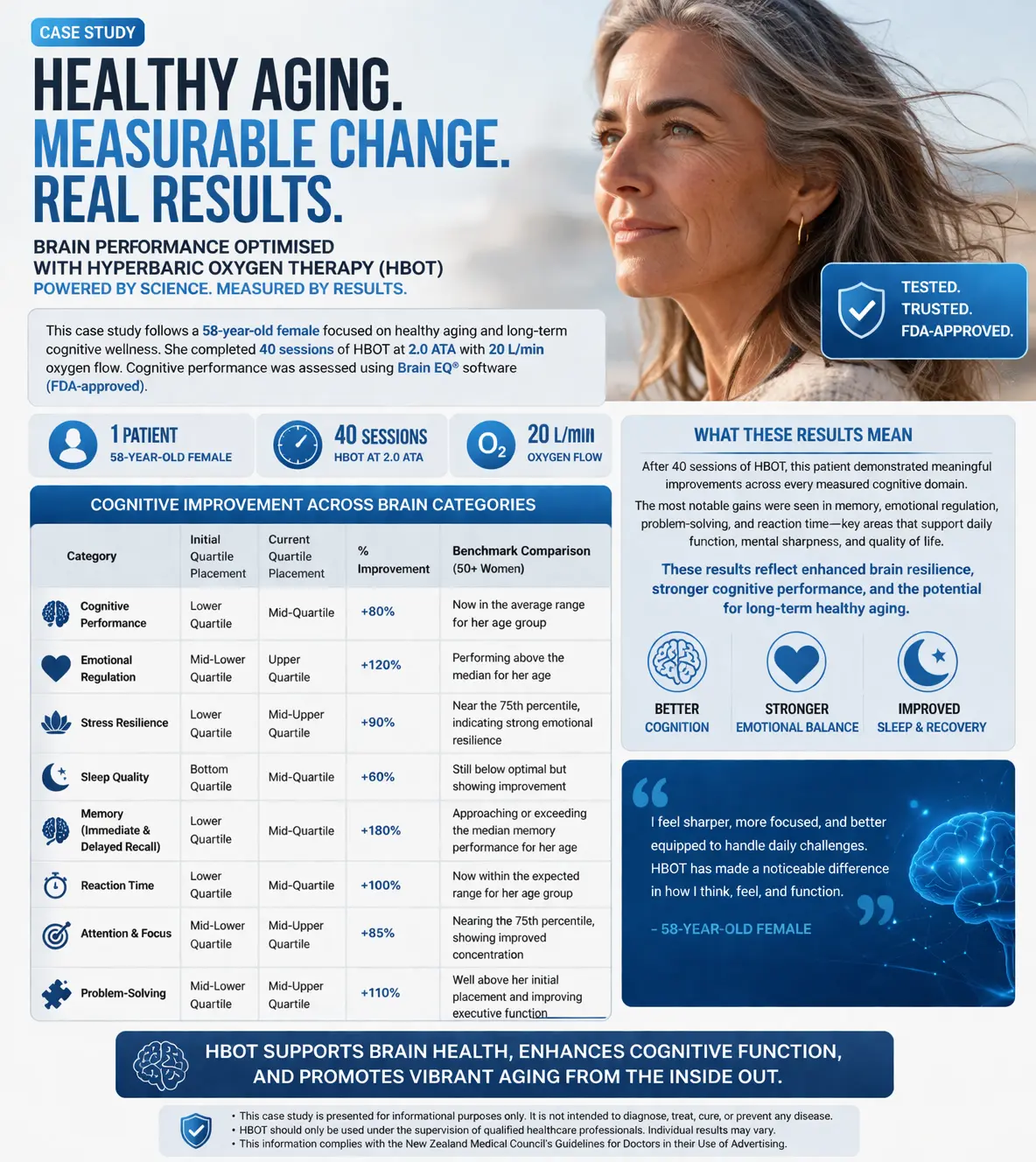 Healthy ageing · age 58Changes across measured domainsView measured case ↗
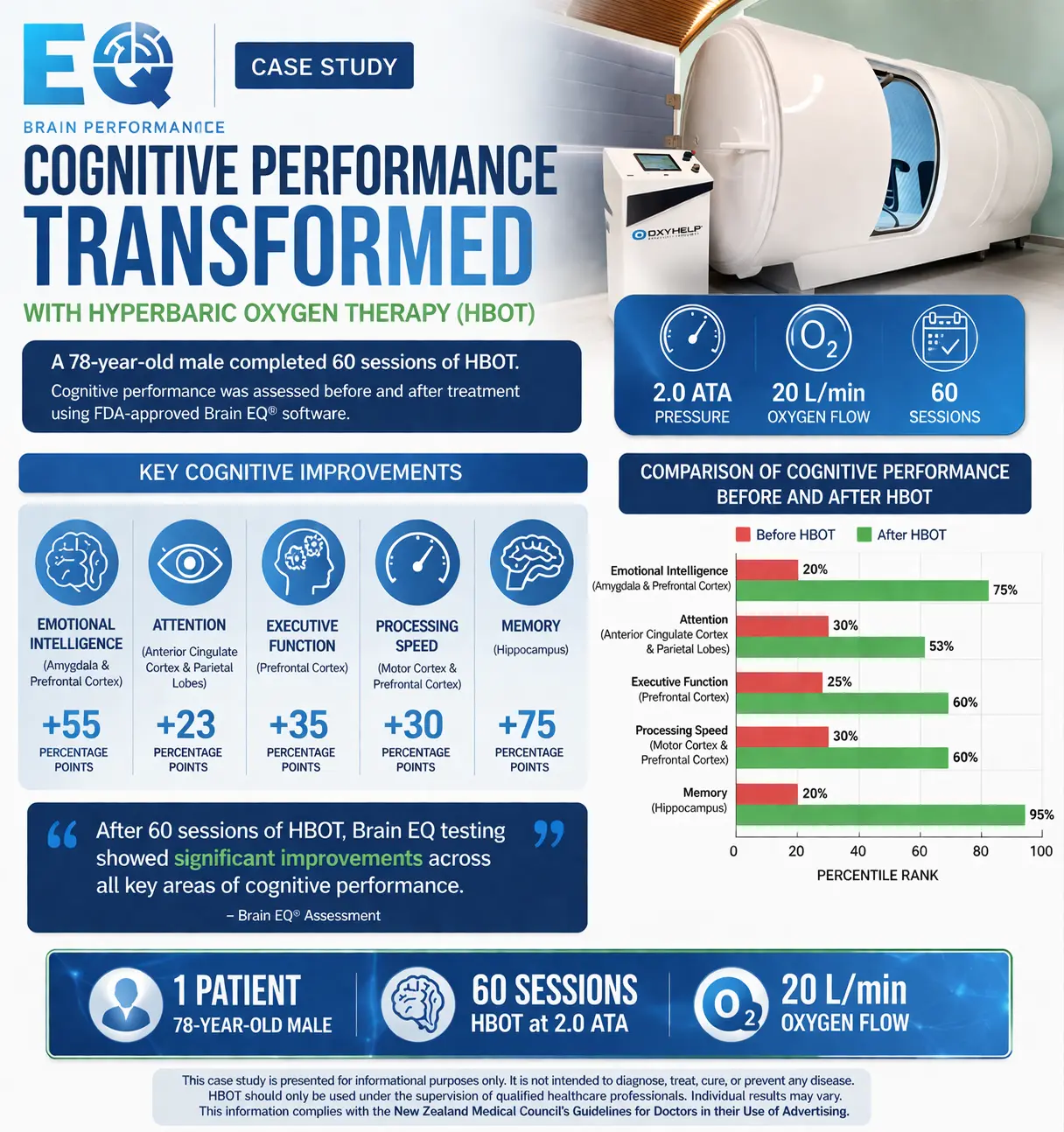 Cognitive performance · age 7860 sessions with repeat testingView measured case ↗
Wellington Hyperbarics
3/2 Northpoint Street, Plimmerton, Porirua. Hard-shell chambers, individual oxygen masks and clinically screened protocols.
Simple, transparent pricing
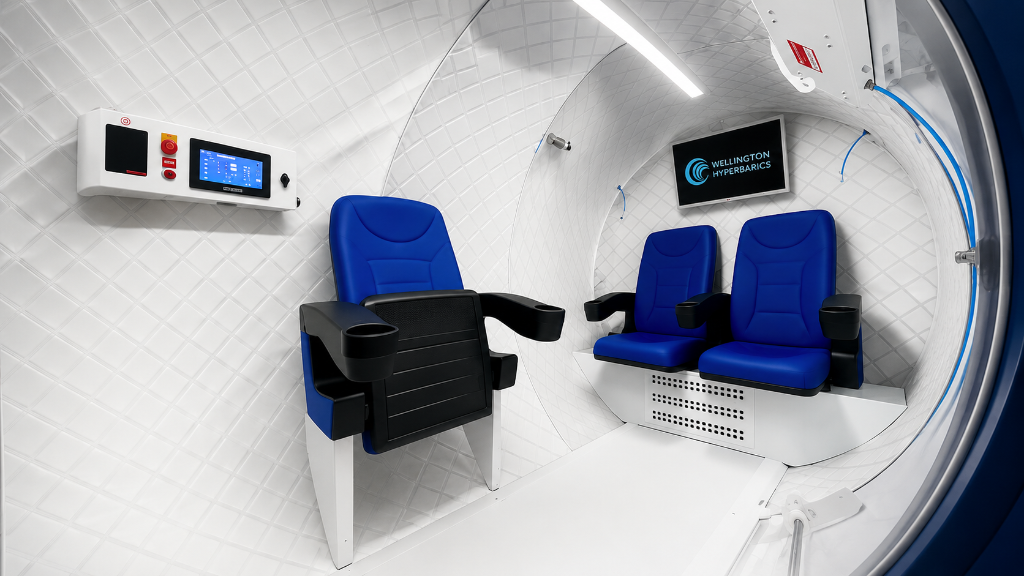
Your treatment is delivered in our hard-shell hyperbaric chamber at 2.0 ATA, with an individual oxygen mask and supervision throughout.
Suitability is subject to screening. We will explain any recommended course before you commit to ongoing treatment.Before you decide
Open any question for a direct answer.
Ask your own question →HBOT is a specialist field. With your permission, we can share the proposed indication, protocol, evidence and safety considerations with your doctor. Treatment should complement appropriate medical care, not bypass it.
Ear or sinus pressure injury is the most common problem. Temporary short-sightedness can occur during a longer course. Less common risks include oxygen-related seizure, lung pressure injury, low blood sugar in susceptible people and confinement anxiety. Strict screening, chamber rules and monitoring reduce risk; an untreated pneumothorax is an absolute contraindication.
After a safety check, pressure rises gradually and your ears may feel like they do on an aircraft descent. At treatment pressure you breathe high-concentration oxygen through your own mask while sitting comfortably. A standard treatment session is approximately 90 minutes, including controlled compression and decompression.
It depends on the condition, timing, protocol and response. Some acute indications use only a few treatments. Many wound, radiation-injury and longer-standing rehabilitation protocols use around 20–40 sessions; some studied protocols use 60. We review rather than assume.
There is no reliable number for everyone. Some people report change within 10–20 sessions, others later, and some do not improve. We establish a baseline and reassess relevant symptoms or function instead of relying on one good or bad day.
Use the right protocol for the right problem, attend consistently and continue the medical or rehabilitation care HBOT is intended to support. Sleep, nutrition, hydration, smoking avoidance and management of conditions such as diabetes also matter. More pressure is not automatically better.
No. Evidence is strong for some recognised conditions, promising but incomplete for others, and weak for some claims. We can explain the evidence and agree on a realistic objective, but we cannot guarantee an outcome.
You may share a multiplace hard-shell chamber with other screened patients. Each person uses an individual oxygen mask and is monitored. Tell us if sharing concerns you so we can explain the planned arrangement.
Hyperbaric providers also operate in Palmerston North, Timaru, Auckland and Cambridge. Chamber type, pressure, clinical oversight and accepted indications differ, so confirm current arrangements directly before travelling.
ACC has a formal non-acute HBOT service schedule, although case-manager familiarity varies. Funding is limited to eligible covered injuries and specified circumstances, and prior approval may be required. ACC makes the funding decision; we can help provide clinical information.
Yes to both. You can contact us directly, and a medical review can be arranged when appropriate or requested. Self-referral is not automatic treatment: screening may show that records, tests or input from your doctor are needed first.
A conversation—not a conclusion
Tell us what you are trying to understand. We will explain what may fit, what may not, and whether medical input is needed.